
Best Printing Methods for Detailed Art
Last Updated: November 25, 2026
Quick Summary
Giclee digital printing holds the finest line work and smoothest tonal gradients, making it the best of the printing methods for detailed art reproductions. Traditional intaglio and relief techniques carry physical texture no digital process can copy, so choose them when surface is part of the artwork.
- Giclee wins on hairline resolution and tonal gradients; traditional methods win on surface texture fidelity.
- Relief printing cannot hold a hairline because the carved surface chips under pressure.
- Capture reproduction files at 300 pixels per inch at print dimensions and soft-proof before printing.
- Paper gives the sharpest detail and most accurate color; canvas weave softens fine line work slightly.
- Match method to artwork: giclee on paper for detailed drawings, etching or lithography for handmade editions.
Table of Contents
- Comparing Printing Methods for Detailed Art
- Which Printing Method Holds Fine Detail Best
- Types of Printing on Paper and How Each Handles Line Work
- Traditional Printing Methods: Relief, Intaglio, and Lithography
- Digital Printing for Artwork: Giclee and Art Reproduction
- High-Quality Art Printing: Substrate, Archival Longevity, and Cost
- Choosing a Method by Artwork Type
- Ordering a Fine Art Reproduction from This Artists Dream
- Frequently Asked Questions
Comparing Printing Methods for Detailed Art
If you are choosing the best printing methods for detailed art, giclee digital printing holds the finest line work and smoothest tonal gradients, while traditional intaglio and relief techniques carry texture no digital process can copy. At This Artists Dream, we sell giclee reproductions of David Heatwole's visionary paintings. Below, we compare every major printing methods family on detail fidelity, materials, and cost.
A print that loses the fine detail of a pen drawing or the subtle color shifts of a painting is a failed reproduction, no matter how good the frame looks.
Quick Comparison Table
Here is how the major techniques stack up on the factors that matter most for detailed art.
| Method | Detail Level | Best Surface | Color Depth | Relative Cost | Best For |
|---|---|---|---|---|---|
| Giclee (digital) | Highest | Paper, canvas | Very high | Moderate | Reproducing paintings and drawings |
| Etching (intaglio) | Very high | Damp paper | Limited | High | Fine line work, tonal effects |
| Engraving (intaglio) | Very high | Damp paper | Limited | High | Crisp, formal line work |
| Lithography | High | Paper, stone | Moderate | Moderate to high | Tonal, painterly images |
| Screenprinting | Low to moderate | Paper, fabric | High, flat | Low per unit | Solid color areas, apparel |
| Relief (woodcut, linocut) | Low to moderate | Paper | Limited | Low | Bold graphic images |
The table gives the headline answer. The rest of this guide explains why each method behaves as it does, and where the trade-offs bite.
Which Printing Method Holds Fine Detail Best
Giclee printing is often cited for holding fine detail well, but the answer depends on what kind of detail you mean. Fine detail breaks into four tests: hairline resolution, tonal gradient smoothness, surface texture fidelity, and photographic accuracy. Each printing family passes some and fails others.
Hairline resolution. Giclee wins. A pigment inkjet printer lays down droplets measured in picoliters, so a one-pixel hairline in a scanned drawing survives as a clean line.
Tonal gradient smoothness. Giclee wins again, by a wider margin. Pigment inkjet printers lay down thousands of distinct color values per channel, so a sky shifting from pale to deep blue prints as a continuous ramp.
Surface texture fidelity. Traditional methods win, and giclee cannot compete. An etching carries the raised ink line and the plate mark, the embossed rectangle where the plate pressed into damp paper. A woodcut carries the grain of the block. A lithograph carries the tooth of the stone.
Photographic and continuous-tone accuracy. Giclee wins outright. Photographs, digital paintings, and any artwork built from smooth continuous tone reproduce most faithfully through a calibrated inkjet workflow with a color-managed file.
Print studios commonly split the decision into two questions. First, does the artwork depend on physical surface, such as raised ink, plate mark, or block grain? If yes, the original edition must be traditional. Second, does it depend on fine line and smooth tone?
For a deeper look at how resolution and color management affect the final print, the Library of Congress guidance on digital imaging is a useful reference on capture standards and file formats.
Types of Printing on Paper and How Each Handles Line Work
The types of printing on paper divide into four families, each handling line work differently. Relief printing presses ink from a raised surface. Intaglio pulls ink from grooves cut into a plate. Planographic printing, including lithography, relies on chemical repulsion between ink and water. Screenprinting pushes ink through a mesh.
Line work is where these differences show. Relief printing gives bold, slightly ragged lines because the paper presses into the carved surface. Intaglio gives crisp, raised lines because ink sits in the grooves and transfers under heavy pressure. Lithography gives soft, drawn lines that mimic pencil or crayon. Screenprinting gives flat, uniform lines with hard edges.
For an artist working in fine detail, intaglio and digital are the two families worth serious attention. Relief and screenprinting serve different goals: graphic punch and solid color.
Traditional Printing Methods: Relief, Intaglio, and Lithography
Traditional printing methods reward patience and craftsmanship, and each leaves a fingerprint on the final image. Relief printing, including woodcut and linocut, carves away everything that should not print. Intaglio, including etching, engraving, and aquatint, cuts into a plate and pulls ink from the recesses. Lithography draws on a stone or plate and relies on the chemistry of grease and water.
Each method has real strengths. Woodcut and linocut produce bold graphic images with strong solid color areas. Etching and engraving deliver the finest line work of the traditional family, which is why old master prints still look razor sharp. Aquatint adds tonal effects, the soft washes of gray that mimic watercolor. Lithography handles painterly, textured images with a subtlety the relief family cannot touch.
The catch is labor. A single etching plate can take days to prepare, and each impression must be pulled by hand. Editions are small, and prices reflect the hours. If you want an original handmade print, this is the trade you make.
Digital Printing for Artwork: Giclee and Art Reproduction
Digital printing for artwork changed the economics of fine art reproduction, and giclee is the standard. A giclee print uses pigment-based inks and high-resolution scanning to reproduce an original painting or drawing with remarkable fidelity to color and detail.
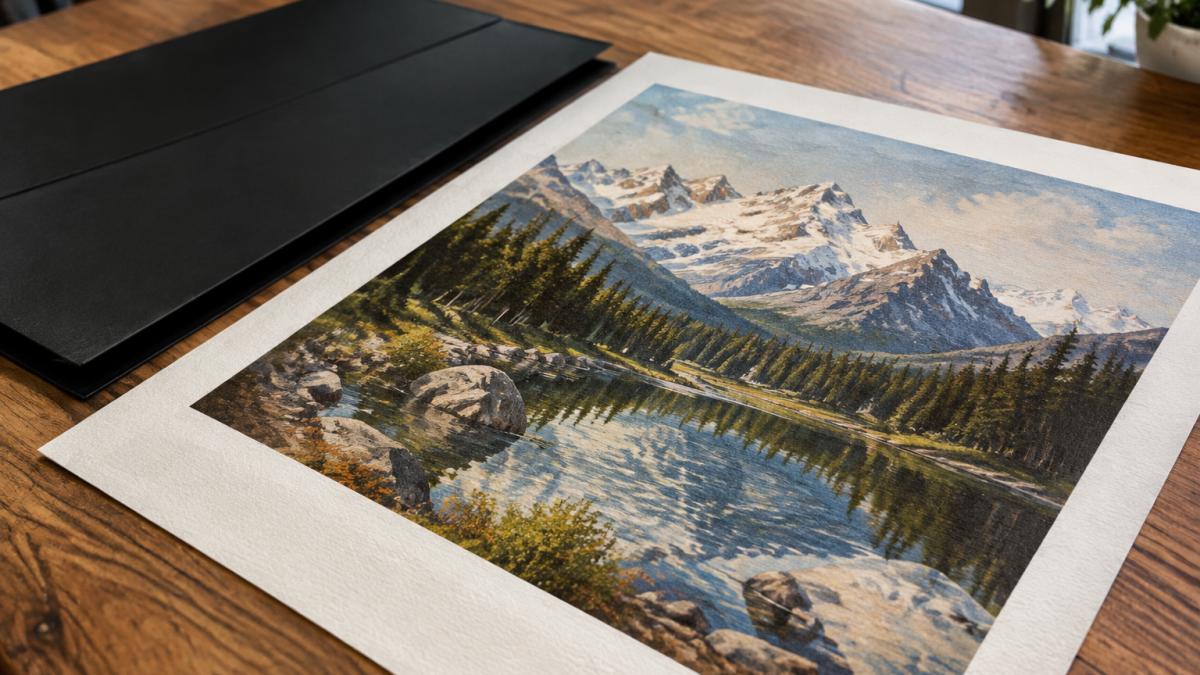
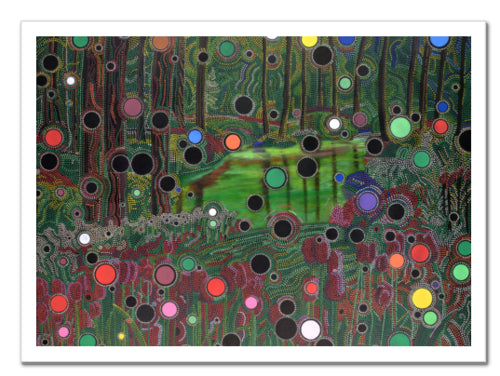
The giclee reproduction on paper of "Reflecting on perceptions of Reality" is a 14" x 10" paper print with a half-inch border and a black 4 ply presentation folder. If you want to see the file-prep side in more depth, the Smithsonian's guidance on digital imaging is a solid primer on capturing artwork accurately.
Where giclee falls short: it cannot reproduce the physical texture of an oil painting or the raised ink of an etching. It reproduces the image, not the surface.
High-Quality Art Printing: Substrate, Archival Longevity, and Cost
High-quality art printing comes down to five variables: the capture file, the substrate, the ink, the proof, and how the finished piece is mounted. Get all five right and a print holds detail and color for decades. Get one wrong and it bands, shifts color, or fades within a few years.
File preparation. Detail begins before the printer runs. A reproduction file should be captured at a resolution high enough to print at final size without interpolation, typically 300 pixels per inch at print dimensions for paper prints.
Substrate. Paper versus canvas is the first physical decision. Paper gives the sharpest detail and most accurate color, which suits drawings and finely detailed paintings. Canvas gives texture and a painterly feel and hangs without glass, but the weave softens fine line work slightly.
Ink and archival longevity. Pigment inks resist fading far better than the dye inks of earlier decades, and most pigment inkjet prints on archival paper are rated to resist noticeable fading for decades under normal display conditions. Display conditions matter as much as the ink.
Proofing and quality control. A proof is not optional for detailed art. Print a small proof or a section at final size, compare it to the original under controlled lighting, and check for banding in gradients, clogged nozzles in fine lines, and color shift in neutrals.
Cost. Cost tracks the substrate, the ink coverage, and the mounting. A paper print is the more affordable entry point. For a full picture of why original and limited-edition art carries its price, our breakdown of why independent art costs more explains where the money actually goes.
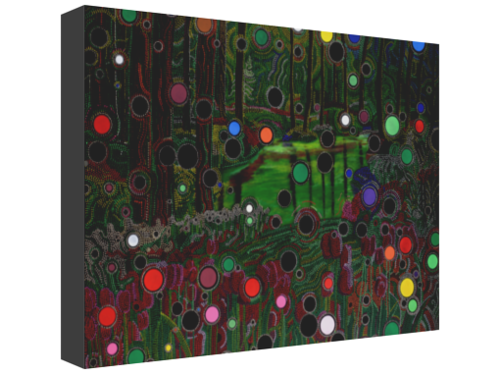
Our canvas reproduction of "Reflecting on perceptions of Reality" is a 14" x 10" canvas print on Artisan Archival Canvas, thin stretched and mounted with a black archival backing and a wire hanger.
Choosing a Method by Artwork Type
Match the method to the artwork, not the other way around. A detailed pen-and-ink drawing needs giclee or etching. A bold graphic poster suits screenprinting or relief. A soft watercolor or oil painting reproduces best through giclee, which captures subtle color transitions that plates flatten.
Here is a simple decision path:
- Finely detailed drawing or painting: giclee on paper for maximum sharpness.
- Painterly image you want to hang without glass: giclee on stretched canvas.
- Original handmade edition with texture: etching, engraving, or lithography.
- Bold graphic image or apparel: screenprinting or relief.
If you are still deciding what to print and hang in the first place, our guide to choosing art for your home walks through scale, placement, and subject before you commit to a method.
Ordering a Fine Art Reproduction from This Artists Dream
At This Artists Dream, we turn visionary art into everyday expression through reproductions you can live with.
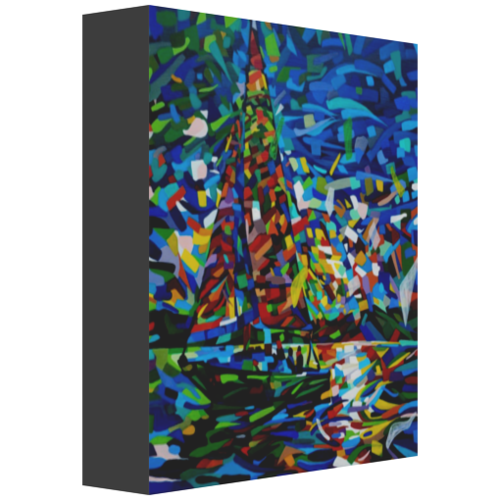
You can start with a giclee reproduction print of "Sailing with Planes I", an abstract sail boat image that is gallery stretched and ready to hang, with custom color edging available on request. Or browse the full collection and find the piece that fits your wall.
Choosing a printing method for detailed art is really a question of what you value most: absolute fidelity, handmade character, or durability on a budget. We built This Artists Dream around giclee reproduction because it preserves the detail and color of visionary paintings better than any other process, and we back it with archival paper, Artisan Archival Canvas, and ready-to-hang mounting. Get started with This Artists Dream and bring a detailed original into your home in a form that lasts.
Frequently Asked Questions
Which printing method is best for fine details?
Giclee digital printing holds fine line work and subtle tonal shifts better than most methods because it lays down ink in very small droplets with no physical plate or screen to compress the image. Traditional intaglio, especially engraving and etching, also captures remarkable detail because the ink sits in incised lines. Screenprinting, by contrast, struggles below roughly 1 mm line widths. For photographic effects, gradient color, and intricate texture, giclee on archival paper or canvas is the safer choice.
What is the difference between digital printing for artwork and traditional printmaking?
Traditional printing methods like woodcut, etching, lithography, and screenprinting transfer ink from a physical plate or screen that the artist prepares by hand, so each impression carries slight variation and the edition is limited by the plate. Digital printing for artwork, including giclee, scans or photographs the original and reproduces it with pigment inks on paper or canvas, allowing identical copies at any quantity. Traditional methods carry hand-made value; digital methods win on fidelity to the original and consistency.
What type of paper is best for printing detailed artwork?
For detailed art, choose a paper with a smooth to lightly textured surface and enough weight to hold pigment without buckling. Premium giclee paper and archival cotton rag are common picks because they accept fine ink droplets without spreading them. Heavier stock, generally 200 gsm and up, resists cockling. If you want texture, a light watercolor finish adds character without swallowing fine lines. Canvas is the alternative when you want a frameless, gallery-stretched look.
How do I prepare a digital file so my art prints with full detail?
Scan or photograph the original at 300 dpi at the final print size, keep the file in a lossless format, and avoid heavy compression. Check that the color profile matches the printer's, and sharpen only at the very end. For a 14 x 10 inch print, that means a file around 4200 x 3000 pixels. Ask the printer for a proof before committing to an edition, and inspect the proof for line clarity, tonal transitions, and color accuracy.
Which printing method lasts longest for detailed art?
Pigment-based giclee printing on archival paper or canvas typically outlasts dye-based digital prints and most traditional inks when framed and kept out of direct sunlight. Archival canvas and acid-free paper resist yellowing. Traditional etching inks on quality paper also age well. Whatever method you choose, UV-filtering glass, a stable humidity level, and avoiding direct sun extend the life of the print considerably.
